
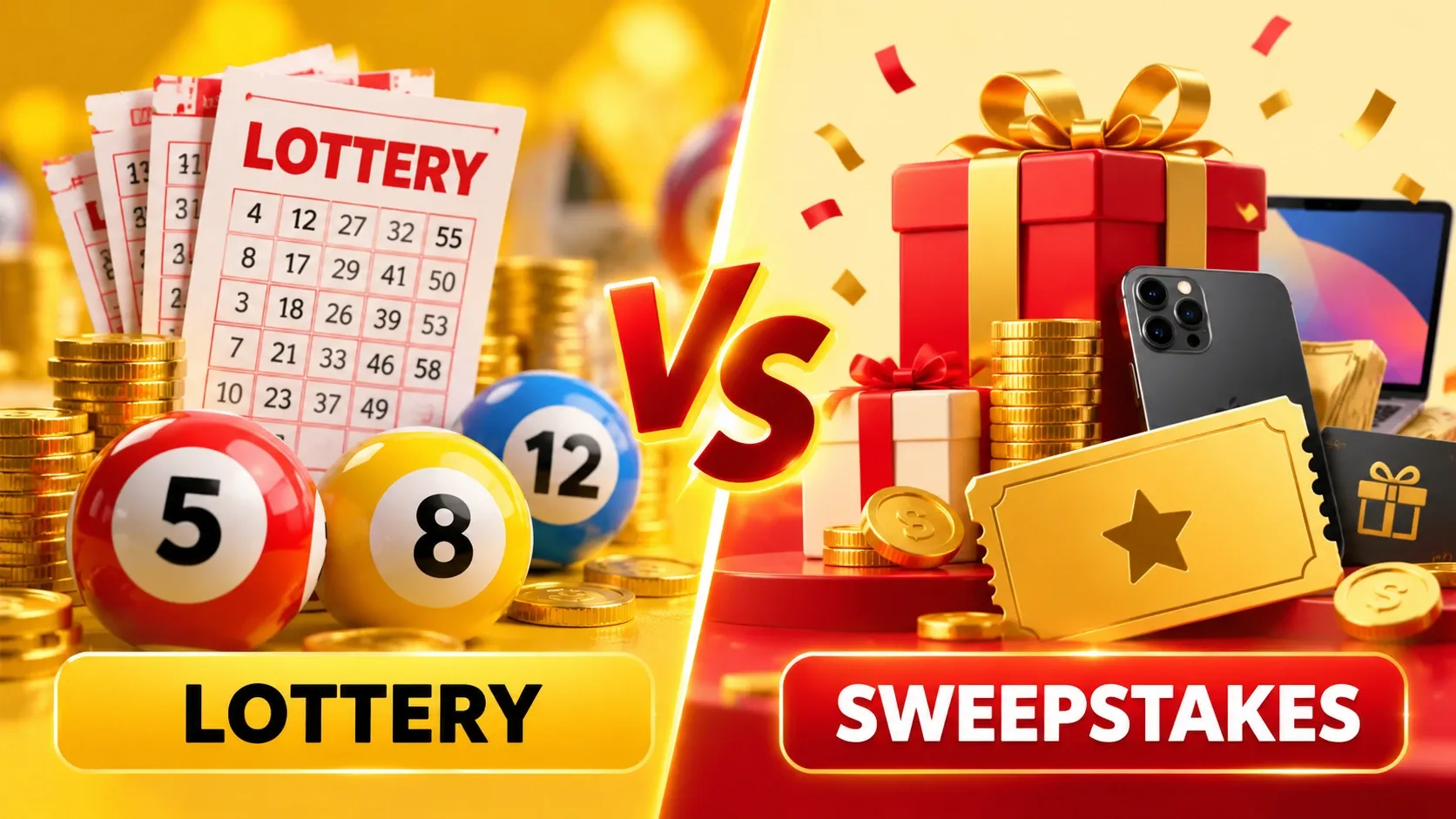
Picture two prize offers side by side. One is a scratch ticket from the corner shop. The other is a free online draw you joined from your phone in under a minute. Luck decides both, so it’s easy to treat them as twins. They are not, and the lottery vs sweepstakes is mainly determined by whether money was paid for participating in the game. Here, we will take you through the guidelines, odds, rewards, and checks to make.
Same Prize, Different Rules: What Sets Them Apart
Almost every prize promotion is built from three parts: a prize, some element of chance, and consideration. That last one is just the legal term for payment. A lottery uses all three. You pay for a ticket, luck picks the winner, and a prize gets handed over.
A sweepstakes drops the payment. Anyone who qualifies can enter without buying a thing. That one change explains why sweepstakes can operate in places where private lotteries are off the table, and it’s why lawyers never use sweepstakes vs lottery as if they were the same phrase, even though everyday conversation does. However, requirements vary under sweepstakes law by state, which is why legal professionals distinguish sweepstakes from lotteries, even though everyday conversations often treat them as the same thing.
There’s also a third cousin worth knowing: the skill contest. A photo competition is a good example. The winner is chosen on merit, so chance plays a small role or none at all.
Questions People Ask Before Entering Either One
Whenever people are asked to explain the differences between a lottery and a sweepstakes, the same questions always surface:
- Am I supposed to pay before being allowed to win anything?
- Are the odds favorable, and who determines them?
- Is it even legal?
- What happens after a win, and does the tax office want a share?
- How can I tell genuine sweepstakes from a scam?
- Each of these gets an answer further down.
How the Rules Differ: Lotteries vs Sweepstakes
Lotteries
- State governments or authorized multi-state groups run them. Private lotteries are generally prohibited in the US.
- A purchase is required, and tickets carry a fixed price.
- Draws happen on a published schedule, and the game design decides the prize tiers.
Sweepstakes
- The sponsor publishes official rules covering the entry period, eligibility, prizes, and how winners are chosen.
- A free way has to exist. You’ll often see it called an alternate method of entry, or AMOE.
- In a properly run promotion, buying something never improves your chances.
The rulebook is the main structure that makes up the whole sweepstakes program. So, if it’s either missing or impossible to understand, consider yourself warned.
What the Odds Really Look Like
Lottery odds come straight from arithmetic. For large national jackpot games, there will be a requirement where players should choose a set of numbers selected from a huge range of numbers, and it is what leads to a chance of 1 out of 292 million of winning the highest prize in Powerball.
The odds of sweepstakes are quite confusing. In a draw-style promotion, your chance depends on how many valid entries arrive. In a game-based sweepstakes, each game’s mechanics decide outcomes, and random number generation does the picking. Neither format promises a win. A platform that does promise wins isn’t describing chance honestly.
A habit that’s worth building: read how the odds are described in the official rules. Plenty of sponsors simply state that the odds depend on the number of eligible entries. That’s a normal, honest thing to say, and it’s better than silence.
What You Can Win and How You Collect It
Lottery prizes come as cash. Big winners often pick between a lump sum and an annuity, and claims go through the state lottery office with a validated ticket.
Sweepstakes prizes run much wider: merchandise, trips, cash, or, on a sweepstakes gaming platform, redemption of eligible winnings under the site’s own rules.
Either way, expect to prove who you are before any payout is released.
Prize winnings can be taxable in the US. A tax professional can explain how that applies to you, and it’s a smart call to make before a large claim, not after.
Who Can Enter? Eligibility Basics
Sweepstakes eligibility lives in the rules, and a few points show up almost every time:
- A minimum age, which shifts by promotion and by state.
- Residency in an eligible state, because some areas restrict or ban sweepstakes outright.
- One account or one set of entries per person.
- Exclusions for the sponsor’s employees and their households.
- Personal details that match your ID when you claim a prize.
For a lottery, eligibility looks simpler on paper. You meet the legal purchase age where you buy, and you’re located in a state that sells tickets. That’s about it.
How a Free-Entry Platform Like JUWA777 Works
JUWA777 is a good example of the model in action. It runs a sweepstakes gaming format built around free Sweeps Coins, and the path looks like this:
1. Create an account. Register with accurate details and meet the age and location requirements shown at sign-up.
2. Receive free coins. Sweeps Coins are available without a purchase. That’s the no-purchase-necessary principle at work.
3. Play eligible games. The providers page shows which game providers and categories are on the platform, so you can look around before you start.
4. Verify your identity. Verification comes before any prize redemption, much like lottery offices checking winners.
5. Redeem eligible winnings. Redemption follows the platform’s published rules and processing steps.
Anyone weighing lottery vs sweepstakes side by side will notice the headline contrast right here. Entry cost is optional, not baked in.
Legal Limits and Fine Print to Know
- Consideration is the line. If a promotion demands payment to enter and awards prizes by chance, it risks being treated as an unauthorized lottery. A free entry route isn’t a courtesy. It’s a legal requirement.
- State rules differ. Some states restrict sweepstakes-style platforms, which is why “void where prohibited” shows up in official rules.
- Rules change. Eligibility lists and requirements get updated now and then, so check the current terms before joining.
- Outcomes are never guaranteed. Chance decides in both formats, so treat either one as entertainment and not as income.
- Taxes may apply to prize winnings.
What Players Typically Walk Away With
Lottery results are pretty predictable in shape. Most tickets return nothing, a handful return a small prize, and a tiny few return something big. Buying more often doesn’t change the math of any single draw.
Sweepstakes results depend on the format. Some people join purely for the enjoyment of free play and never redeem a thing. Others redeem small amounts. A few see bigger outcomes. A sensible approach is to decide beforehand what you’re comfortable spending in time or money, if anything, and then actually hold to it. That small bit of planning matters more than any tip about picking games.
Case Study: Two Friends, Two Ways to Play
Eliza buys two lottery tickets every Friday, about $4 a week. Across a year that’s roughly $208. She wins a few small prizes and enjoys the small thrill of watching the draw. Her friend James opens a free sweepstakes account on a platform like JUWA777, uses the coins he’s given, and plays a few rounds in the evening. He spends nothing, redeems nothing in his first month, and decides it works as a casual hobby.
Neither approach is the “right” one. Eliza pays for a shot at a very large prize with long odds. James takes part for free, and his outcomes depend on the games he picks. What matters is knowing what each format asks of you before you begin.
Conclusion
A lottery requires an entry fee, runs by state agencies, and provides big jackpots against poor odds. The sweepstake requires a free entry option, runs according to established rules, and provides different prizes depending on the format. If you are deciding between lottery vs sweepstakes, you should check their rules and eligibility requirements.
See How Free-Entry Sweepstakes Play Works
You can explore JUWA777 with a free account and see how Sweeps Coins work for yourself. Browse the providers page to check the game lineup, read the rules, and play at your own pace. If you decide to add coins later, the code unicode25 takes 25% off your purchase.
FAQs
1. Do sweepstakes winners have to pay taxes on their prizes?
Sweepstakes wins in the United States are considered taxable, although how much you pay will depend on what your prize is valued at and whether there is accompanying paperwork for you to complete as part of this.
2. What does “void where prohibited” mean in sweepstakes rules?
It means the promotion isn’t valid where local law bans or restricts it. If you live in one of those places, you can’t take part, even if you meet every other requirement.
3. Is a purchase required to take part in JUWA777?
No. The platform follows a sweepstakes model, and free Sweeps Coins are available so you can participate without buying anything. Any coin purchase is optional, and the platform’s rules lay out the options in full.
4. Where can I see which game providers JUWA777 works with?
The providers page lists the providers and game categories on the platform. Take a look before signing up so you know the lineup suits you.
5. What do I need to do to redeem a prize on JUWA777?
You complete identity verification and follow the redemption steps in the platform’s rules. Processing details are listed there, so read them before you submit a redemption request.
Authored and Validated By: A Sweepstakes Gaming Expert